


Hernan Bas - The Visitors. The Exhibition at Ca' Pesaro
- Feb 26
- 3 min read
With over thirty new paintings presented within an immersive installation conceived specifically for the museum, Hernan Bas (Miami, 1978) brings The Visitors to Ca’ Pesaro – International Gallery of Modern Art, in the Dom Pérignon Rooms.

Drawing inspiration from Venice—a city particularly sensitive to tourism, constantly reshaped by its consequences, and where the artist undertook a residency—Bas has created a new body of work centered on tourists placed within both imagined and real settings. The protagonists—predominantly white, Western men—inhabit a shifting terrain of “bucket-list” attractions, historic sites, sacred spaces, seedy venues, and sanitized versions of the natural world. The works highlight tourism clichés, from the Mona Lisa and the Trevi Fountain to destinations associated with so-called dark tourism, such as Chernobyl, Alcatraz, and the Aokigahara forest—sites marked by pain that become stops along curated itineraries. These tourist traps further underscore the fundamental disconnection between the “visitors” and the worlds they traverse: places designed to deceive, exploit, or disappoint.
Bas has long been celebrated for his narrative works infused with humor, decadence, eccentricity, occult undertones, and layered codes. He explores the complexities of personal identity through figures suspended in moments of transformation, where the ordinary slips into the extraordinary. In The Visitors, this sensibility turns outward. Like the dandies and flâneurs of Bas’s earlier works, these new figures hover on thresholds—between curiosity and arrogance, encounter and violation, experience and spectacle.
Many of these new figures appear caught in acts of performance or fabrication, posing, taking photographs, or adopting disguises. One of Bas’s tourists claims resident status; another (American) pretends to be Canadian; and yet another visitor in Thailand stages an encounter with a python. In a dynamic typical of Bas’s ironic sensibility, a feeling of affection for his awkward and disoriented visitors collides with a lucid critique of an era defined by globalization, stripped of stable cultural or geographic reference points.
Part of this new body of work was created during the artist’s residency in Venice, in close contact with the lagoon, its light, its painterly tradition, and its tourists. In these paintings, the visitor becomes both painter and painted subject. In recent decades, the historic city of Venice has suffered from the rise of mass tourism, which has damaged its monuments, lagoon, residents, and history. Venice itself—long shaped by exchange and now strained by mass tourism—becomes both the setting and the mirror of the issues addressed in the works. Bas also channels his lifelong understanding of what it means to live alongside tourists in Miami, as well as his own condition as a first-generation Cuban American, often perceiving himself as a visitor in his own home.
Displayed in an immersive sequence, the canvases form a continuous visual narrative. Photographic framing, saturated surfaces, and accumulations of telling details—slogans, tattoos, accessories—function as contemporary vanitas, revealing the moral ambiguities inherent in global mobility. Here, Bas captures a generation adrift—simultaneously searching for meaning and absorbed in itself—inviting viewers to recognize, within this suspended world, their own reflection.
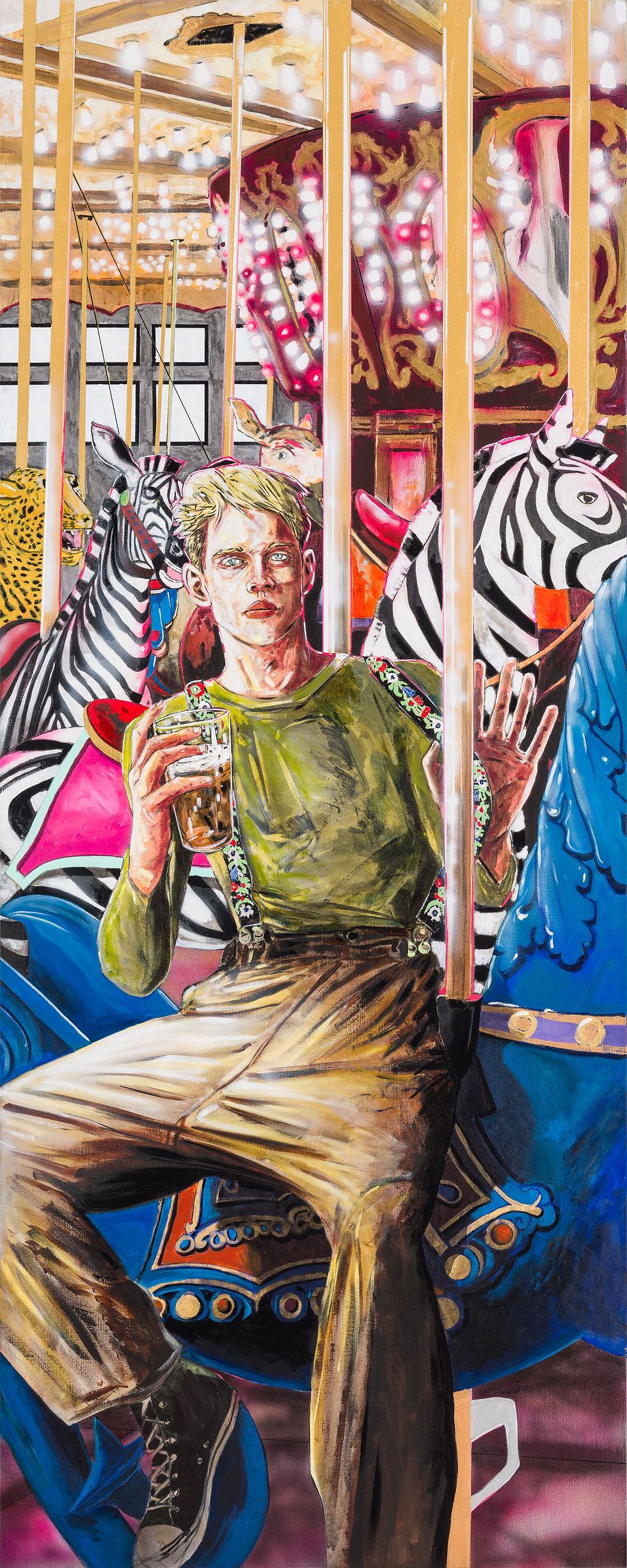
As Elisabetta Barisoni, Head of Ca’ Pesaro and curator of the exhibition, notes: “In the rooms of the International Gallery of Modern Art in Venice, we are welcomed by a procession of figures who, at first glance, seem to represent youth immersed in the discovery of the world, but who instead reveal an absurd, paradoxical, even comic situation.
The monumental series,” Barisoni further observes, “depicts a vision that is constantly before our eyes—one shaped by gullible tourism, voyeurism, and behavior that pushes beyond the limits of respect for others and, in extreme cases, for human dignity. In works that at first appear to be souvenir snapshots or exotic keepsakes, history and memory begin to waver, while the very sense of reality starts to fracture.”


Comments